Correct Answer

verified
Correct Answer
verified
A) hydrophilic/inside
B) hydrophilic/outside
C) hydrophobic/inside
D) hydrophobic/outside
F) B) and C)
Correct Answer
verified
Correct Answer
verified
A) hydrophilic and hydrophobic.
B) polar and hydrophobic.
C) polar and hydrophilic.
D) nonpolar and hydrophilic.
F) A) and B)
Correct Answer
verified
Correct Answer
verified
B) False
Correct Answer
verified
Correct Answer
verified
A) emulsifier
B) facilitated diffusion
C) lecithin
D) leukotriene
E) eicosanoid
F) active transport
G) wax
H) prostaglandin
I) cerebroside
J) saponification
L) C) and G)
Correct Answer
verified
Correct Answer
verified
A) triglyceride.
B) cholesterol.
C) progesterone.
D) eicosanoid.
F) B) and D)
Correct Answer
verified
Correct Answer
verified
A) the result of the reaction of a fatty acid and sodium hydroxide.
B) extremely hydrophilic due to the head end of the compound.
C) mixtures of water insoluble compounds, especially esters.
D) small compounds produced when short chain fatty acids react with an alcohol.
F) A) and D)
Correct Answer
verified
Correct Answer
verified
A) reduced circulation to the brain and liver.
B) muscle atrophy and blocked arteries.
C) high blood pressure and testicular atrophy.
D) the interruption of nerve impulses and reduced intestinal function.
F) A) and D)
Correct Answer
verified
Correct Answer
verified
Correct Answer
verified
a) saponif...View Answer
Correct Answer
verified
View Answer
A) osmosis
B) diffusion
C) facillitated diffusion
D) active transport
F) A) and B)
Correct Answer
verified
Correct Answer
verified
Correct Answer
verified
Correct Answer
verified
A) emulsifier
B) facilitated diffusion
C) lecithin
D) leukotriene
E) eicosanoid
F) active transport
G) wax
H) prostaglandin
I) cerebroside
J) saponification
L) A) and I)
Correct Answer
verified
Correct Answer
verified
A) The hydrophobic tail of lauric acid is longer than the hydrophobic tail of stearic acid.
B) Stearic acid is soluble in water and lauric acid is not soluble in water.
C) Stearic acid is a fatty acid, whereas lauric acid is not a fatty acid.
D) The London force interactions are stronger in stearic acid than they are in lauric acid.
F) B) and C)
Correct Answer
verified
Correct Answer
verified
A) phospholipid
B) wax
C) steroid
D) glycolipid
F) A) and C)
Correct Answer
verified
Correct Answer
verified
A) anabolics that may be involved in increasing blood pressure.
B) eicosanoids that are involved in blood clotting.
C) adrenocroticoids that aid in the activation of sex hormones.
D) lipids that have the capacity to cause membranes to grow.
F) B) and D)
Correct Answer
verified
Correct Answer
verified
Correct Answer
verified
Correct Answer
verified
A) anabolic steroids
B) adrenocorticoids
C) prostaglandins
D) leukotrienes
F) B) and C)
Correct Answer
verified
Correct Answer
verified
A) are long molecules with multiple polar points.
B) have a head that is nonpolar, as is the tail.
C) have a polar end and a nonpolar end.
D) have two ends that are nonpolar with a polar middle.
F) B) and C)
Correct Answer
verified
Correct Answer
verified
A) arachidonics
B) eicosanoids
C) adrenocorticoid hormones
D) sex hormones
F) C) and D)
Correct Answer
verified
Correct Answer
verified
A) 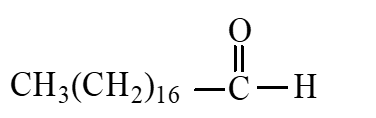
B) 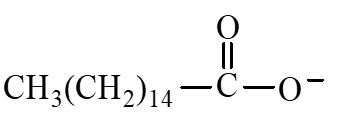
C) 
D) 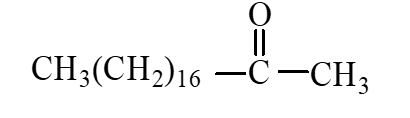
F) A) and D)
Correct Answer
verified
Correct Answer
verified
Showing 61 - 80 of 90
Related Exams